In late spring and early summer—May and June—there’s plenty going on outside. Flowers are appearing everywhere, insects are buzzing around, you could be forgiven for missing the soft, puffy clouds of elderflowers in the countryside hedgerows. Sambucus nigra, the common elder, is found all around the countryside. It’s no attention-seeker, but once you have found it, its flowers are an irresistible invitation to get to know it well.

The scent is delicate: sweet like honey, maybe a slight citrus blossom background note, with a pinch of something that says summer is here. You can catch the fragrance in the air as the morning sun illuminates the fluffy blooms. The fragrance clings to your skin, as does the pollen if you pick the flowers—and you really should pick the flowers.
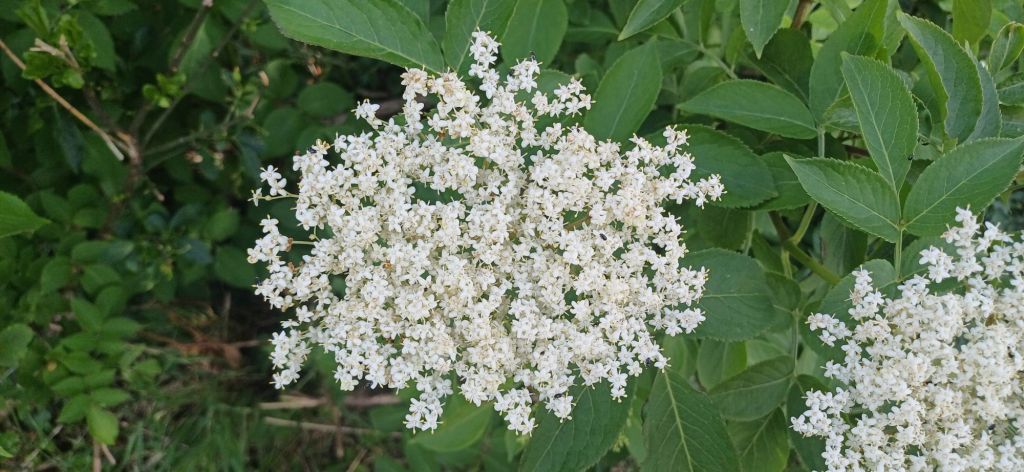
Make elderflower cordial—make loads, and freeze it. Don’t just target one bush—go for a nice long walk and take a few flowerheads from each elder you come across (unless it’s near a busy road). Let the scent guide your picking—smell each flowerhead. Choose the ones that look bright and smell vibrant. Avoid any that are browning or carry a strange odour.

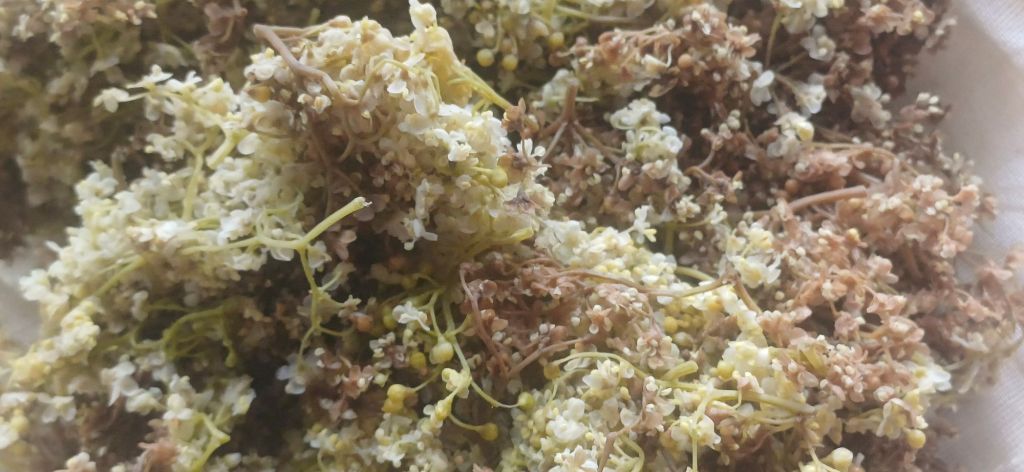
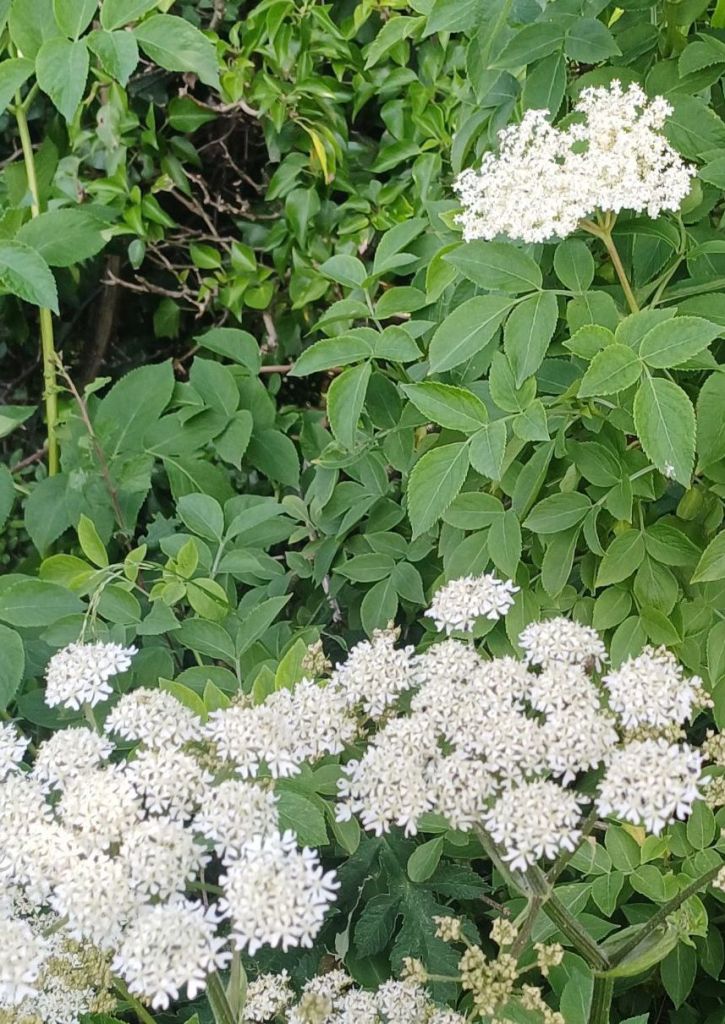
You’ll need to do a bit of research to confidently identify common elder before you go. Pay attention to lower flowers—I’ve seen similar white blooms from potentially poisonous plants growing through lower elder branches and appearing to be part of it. So be careful, but don’t let that put you off.
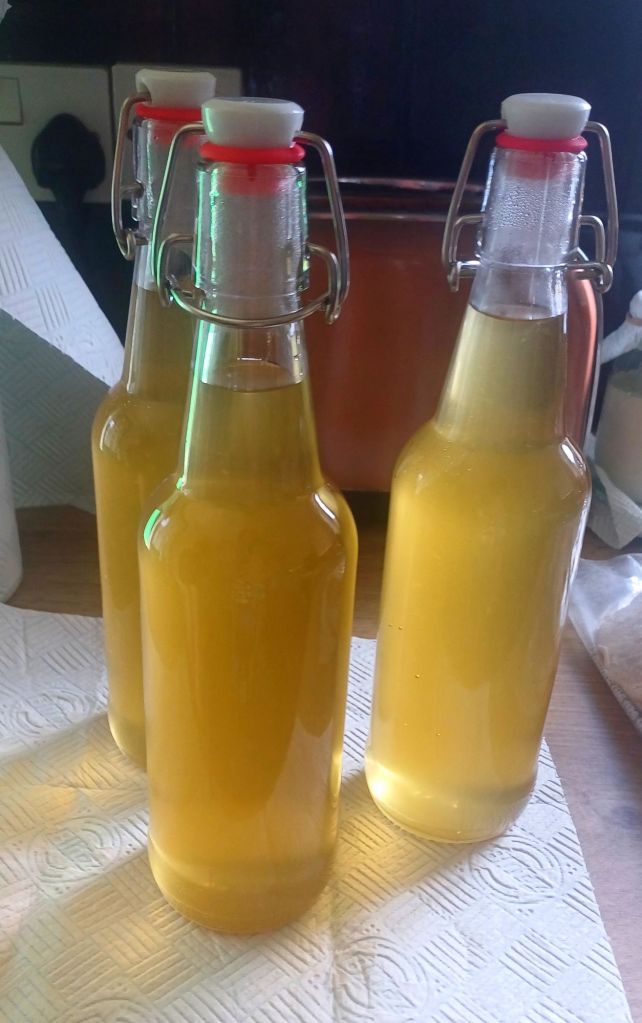
Once you’ve dabbled with cordial, there’s plenty more possible uses to explore. Maybe try elderflower champagne, if you’ve got any experience with fermentation or brewing. I haven’t mentioned all of its uses, so start your own investigations online and find an idea that inspires you. Perhaps the medicinal properties will be of interest—or maybe the folklore and myths surrounding elder.
For me, cordial is my main interest. I don’t care much for shop-bought juices filled with artificial sweeteners—I’d rather lose my teeth to real sugar. At least it’ll be a sweet demise. Inevitably, as a result of my distaste for the artificial, I drink flavoured cold drinks less often, and as such this is a homemade treat that I really love. The taste is like a sunny summer countryside day. Every mouthful is summer itself, and if paired with sparkling water, the experience is elevated hundredfold.
Wildlife seems to love elder as much as I do. In addition to the uses I enjoy, it brings wonderful insect and bird visitors too. So it should come as no surprise that I wanted it in my garden.
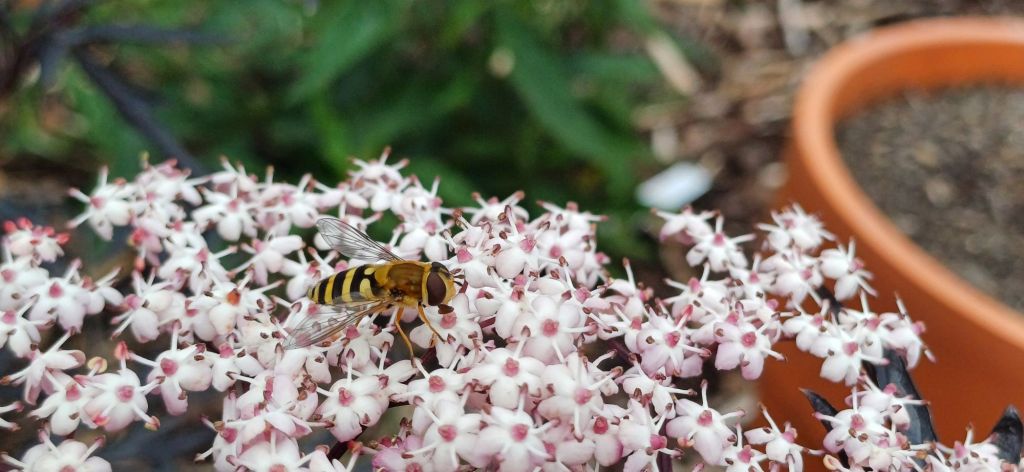
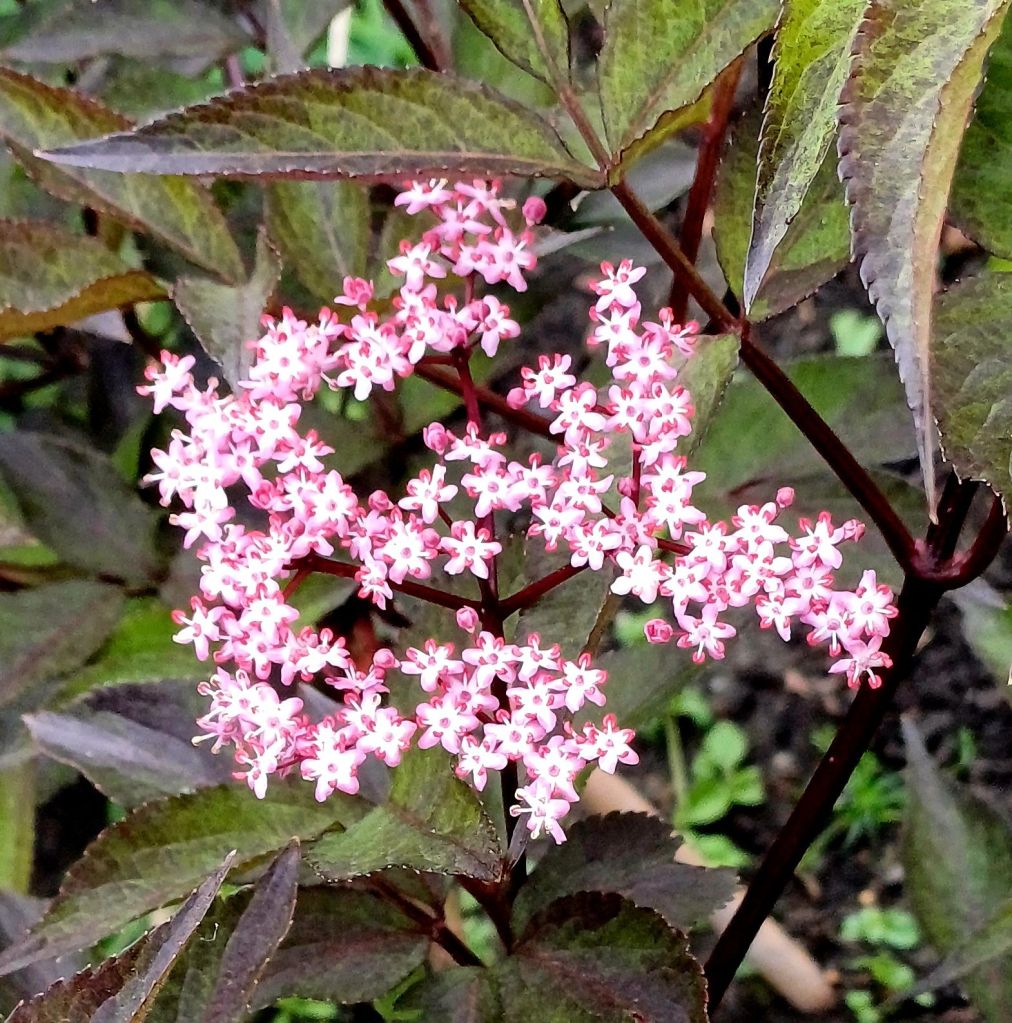
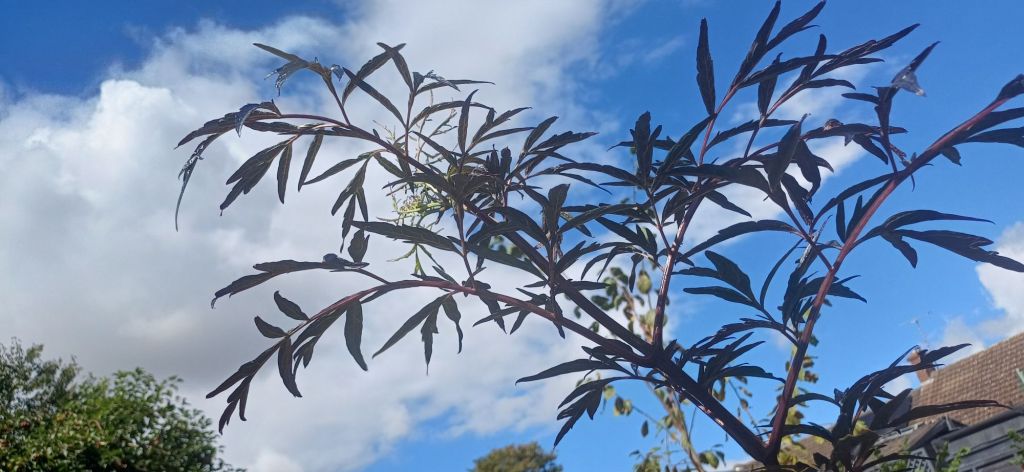
Bringing elder into the garden wasn’t entirely smooth. I knew I loved the plant and bought several common elder saplings from a hedge plant specialist online. But no sooner had I planted one, I discovered the fancy varieties: ‘Black Lace’, with almost acer-like leaves, and ‘Black Beauty’, whose foliage resembles the common elder but in darker tones. I pulled out the common elder and quickly replaced it with one of these fancy specimens, followed by another placed elsewhere.
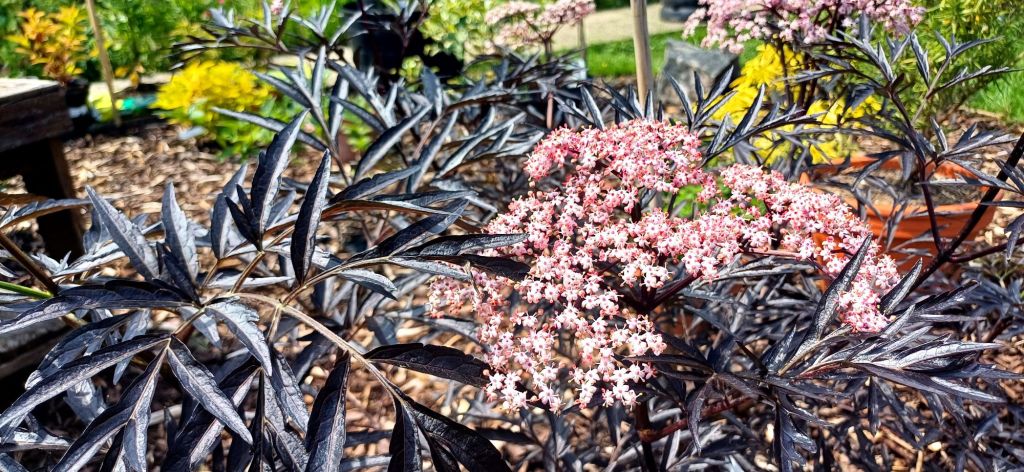
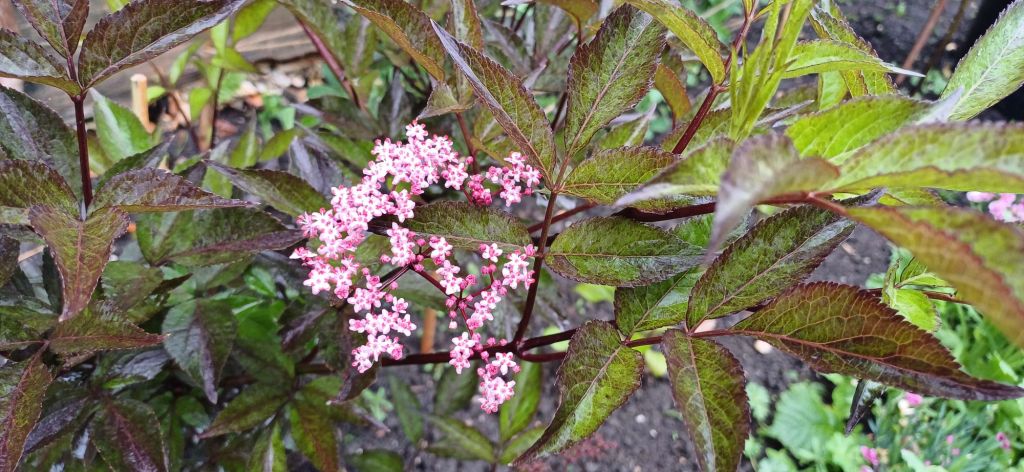
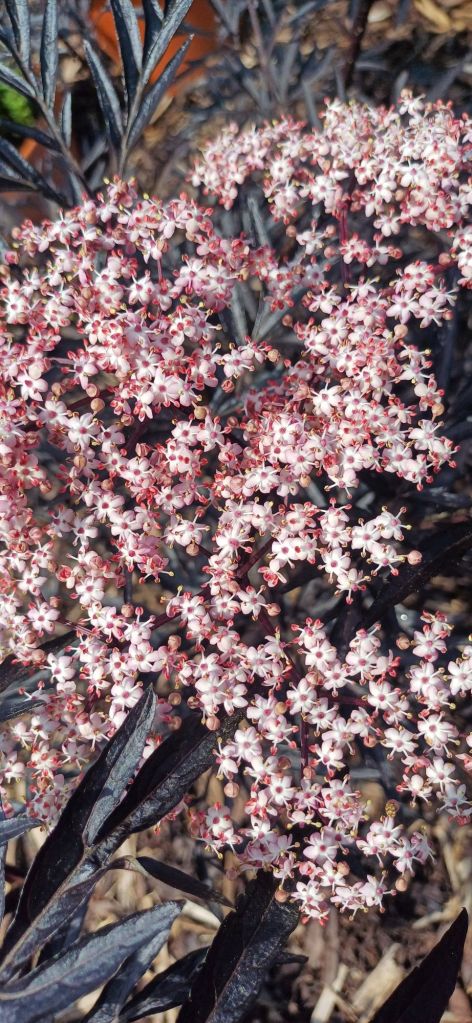
Once planted, they grew fast—filling out their space within months. These varieties flower pink, and against the dark leaves, the colour really pops. Have a look at all the varieties—there’s something for everyone.
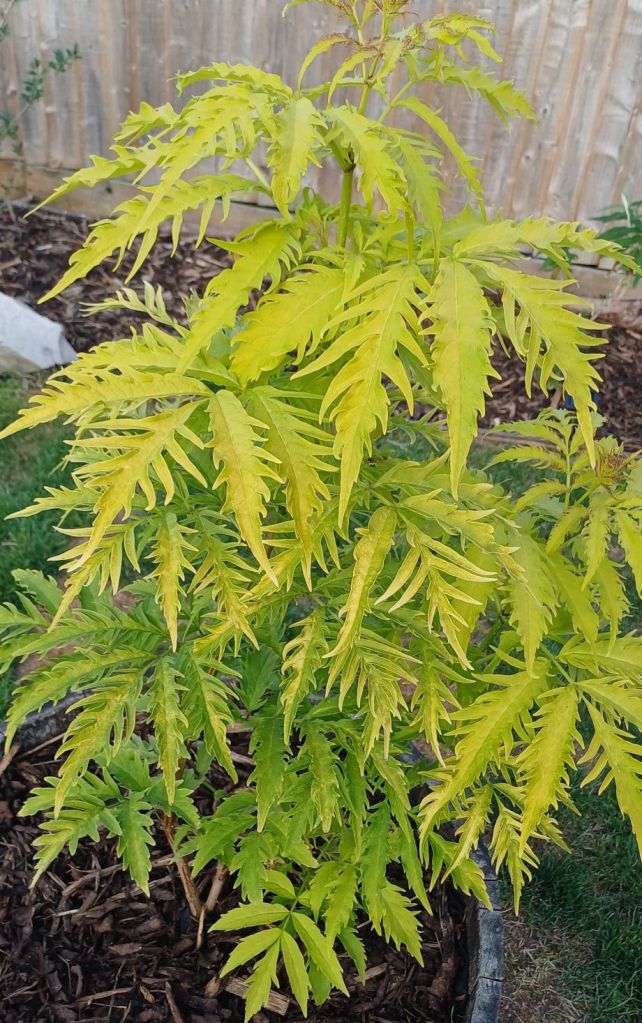
Since those early arrivals, I’ve added a red elder called ‘Sutherland Gold’, with beautiful, golden yellow, almost fern-like leaves. ‘Sutherland Gold’ isn’t Sambucus nigra, it is in fact a cultivar of red elder Sambucus racemosa, a beautiful fancy variety, which can be used in the same way as Sambucus nigra according to online sources, and could make a wonderful addition to any garden.
That really should be it for my garden but, as per usual, I’ve been looking. Two other varieties stand out, a variegated elder called ‘Madonna’ and another called ‘Lemony Lace’. I’ve no clue where to place them just yet, but I really would like to add them to my garden in the future. I think I need a bigger garden!!
So yes, respect your elders—they deserve it! Whether you’re wandering along hedgerows or planning your next resident garden plant, take a moment to notice and consider elder. Its common form may not shout for attention, but it offers more than enough to earn your respect and you could easily grow one from a wild cutting acquired during a late summer ramble. Alternatively, buy a nice showy one from your local garden centre and enjoy all the same summer rewards with looks to match. Once it’s part of your life, you might wonder how summer ever felt complete without it.
Disclaimer: I’m not a botanist, just an enthusiast. If this inspires you to try something, brilliant — but it’s entirely your responsibility to learn how to do it correctly, safely, and legally. I’m only talking from personal experience. So, very simply, don’t go making yourself prematurely dead.

Discover more from Shrubliminal
Subscribe to get the latest posts sent to your email.
 Shrubliminal