
I told myself I was loving it. That the colder, damp air and fallen leaves were great. That the buds on the forsythia and winter-flowering honeysuckle were all positive signs. I even said it aloud—something about how it wasn’t the end, just seasonal change, etcetera. But in truth, I was hating every minute of it.

Summer was slipping through my fingers, and with it, my plants. The lushness, the abundance of colour, the warm, long evenings filled with floral fragrancs. I watched my garden fade and pretended I was cool with it—smiling at the shrivelled silhouettes whilst quietly sickened by the collapse.
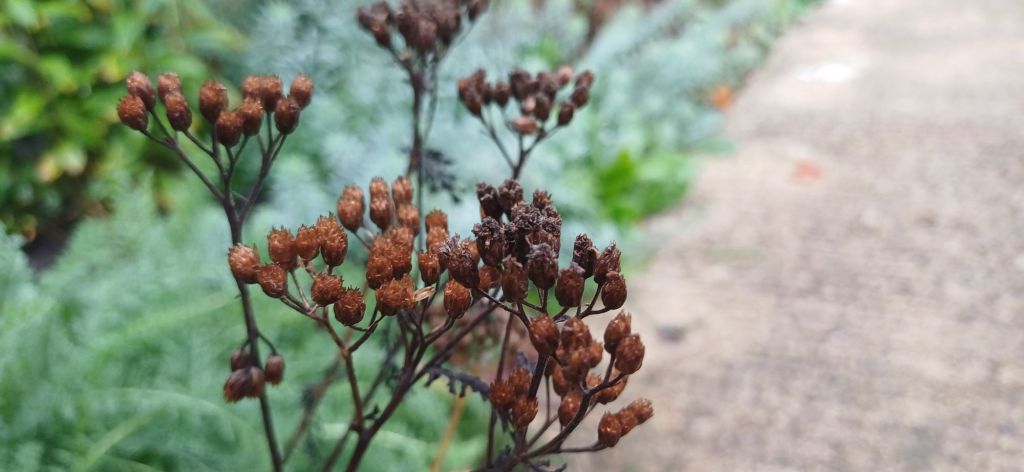
Still, I kept walking around the garden, though much less often and less enthusiastically. I kept pretending. And then, somewhere along the way, it changed. The story I was telling myself became real. The garden was transforming, and I let it.
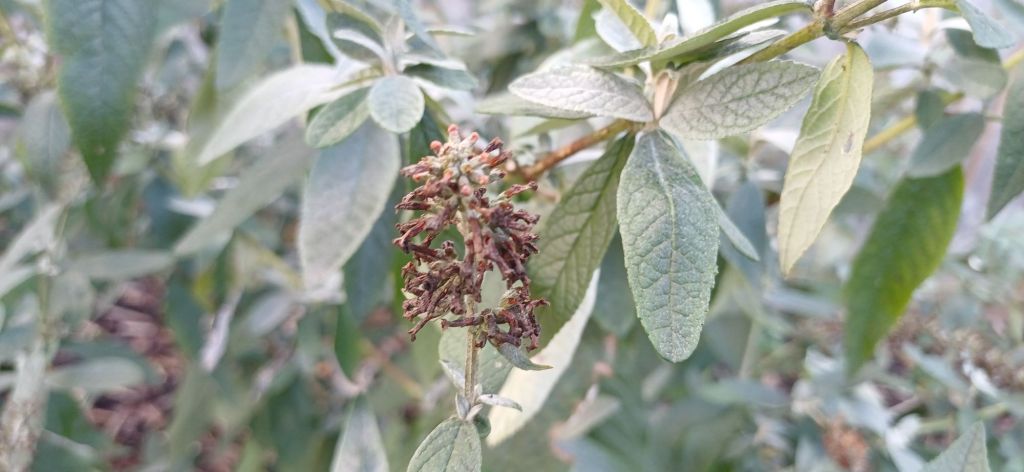
I no longer felt the need to be so attached to the odd flower, and once I stopped trying to salvage summer, it got much easier. Fake it ‘til you make it, as they say—whoever they are. Most likely what happened is the garden declined so far beyond saving that I just gave up hope, and somewhere within that surrender, I accepted it.
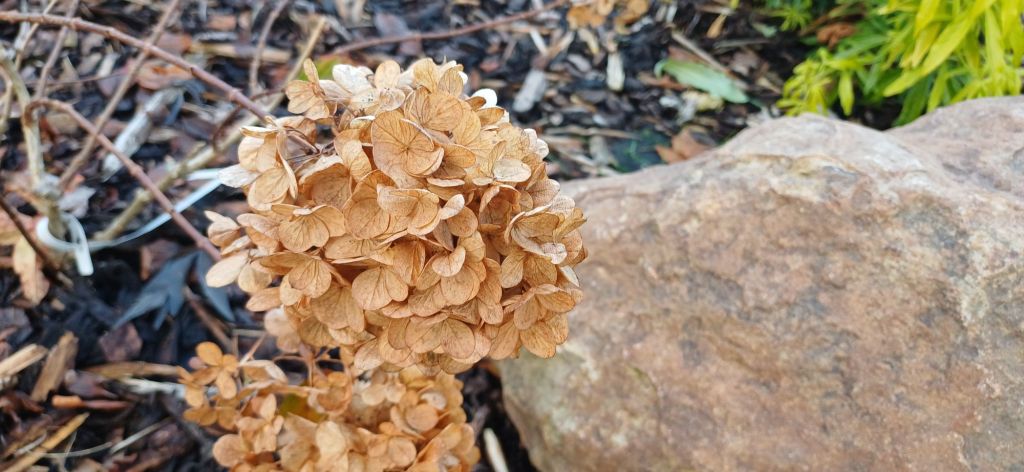
When walking the garden recently, the seasonal changes were impossible to miss. The last remnants of summer were barely hanging on. Nothing left was worth worrying about—it was all just organic debris. And what a relief. With nothing to cling to, I could finally see all the shifts more clearly: the plant structures emerging from the mess, a magical collection of leafless frameworks, and the quiet beauty of decay all around them.
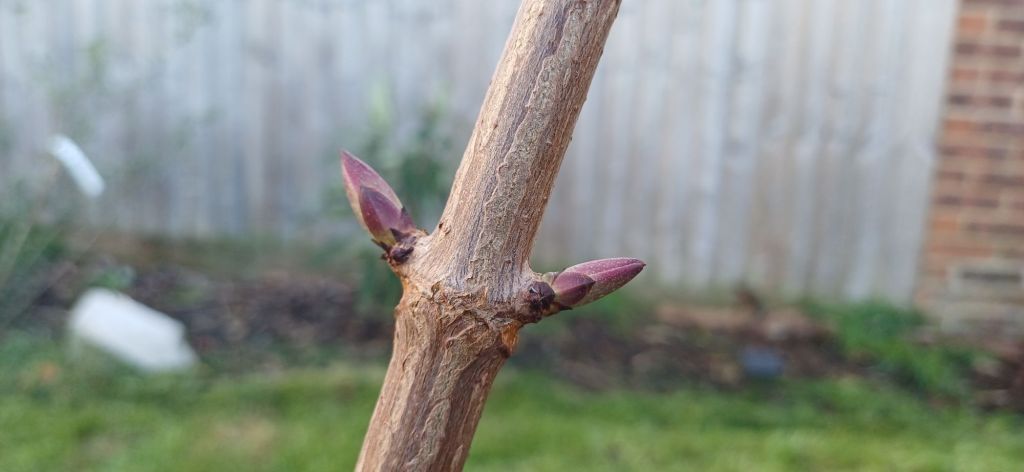
Nature teaches you things, if you’re paying attention. This is a good lesson in patience, and it extends far beyond the garden. Not everything is instantly enjoyable—but with time, we can get used to things. Even grow to like what we once resisted. Autumn has always had its charm, but I’d never watched a whole garden fall apart day by day—especially not one I’d poured effort and money into. A beautiful, vast autumn landscape is one thing, but a small garden where everything is dying in front of you is another.

Well, it’s all dead now. All that’s left is the autumn face of my garden, and I’ve come to like it. Though it is an acquired taste. It’s also a bit harder to love, since it follows my favourite season of the year. It’s just a bit different, that’s all. Fortunately, all the foundations of my much-loved plants are still there. I’ll hopefully see them bounce back again in the spring.

At the beginning of autumn, a few late summer flowers still hung on, but they worked as a distraction—overshadowing the autumn beauty that was trying to emerge. I guess glitter isn’t much next to diamonds. But take away the diamonds, and glitter gets its big moment too. That’s where we are now—no diamonds, just glitter. Barely any summer flowers remain now.
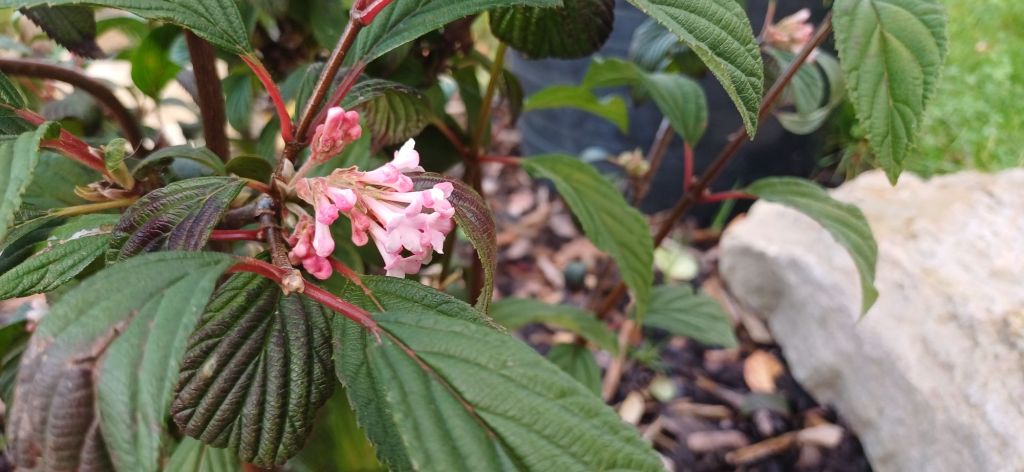
There’s something bittersweet about admiring dying flowers and crunchy brown leaves. It’s a bleak outlook, but it’s all part of the natural cycle. The roots are still growing, and we have winter flowers beginning to appear, so it’s still a wonderful place to be. We’re in a phase of waiting now—hopeful, nervous, maybe a bit unsure. It’s a gamble, and patience is the only strategy. There’s nothing else I can do but wait.
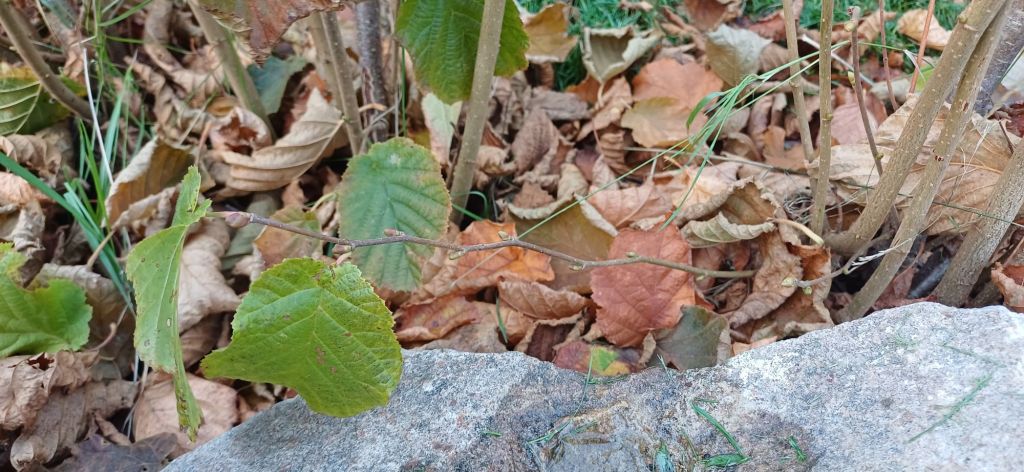
I’m putting it all to the back of my mind. The garden doesn’t need much now or over winter, and maybe I don’t either. The grass had a final cut, and the frosts have arrived. I’ll put my trust in the process now, do what the garden does—and have a little rest.
I’ll still walk the garden, even when it’s frozen solid. I’ll enjoy the cold, fresh air. Compliment the frosty evergreens on their hardiness. Just be there, alongside the garden. In hands-off mode, but actively optimistic whilst winter storms bear down on us.

What have I been doing in the garden recently? Not much. I’ve mainly been splitting logs for the fire and pulling the odd weed. The grass has been cut and shouldn’t need cutting again until next year. I’ve been tidying up the storage cupboard and checking on a few young cuttings. Fallen leaves will stay where they land—worms can take care of them when no one’s looking. I think I’ll let everything rot down in place.
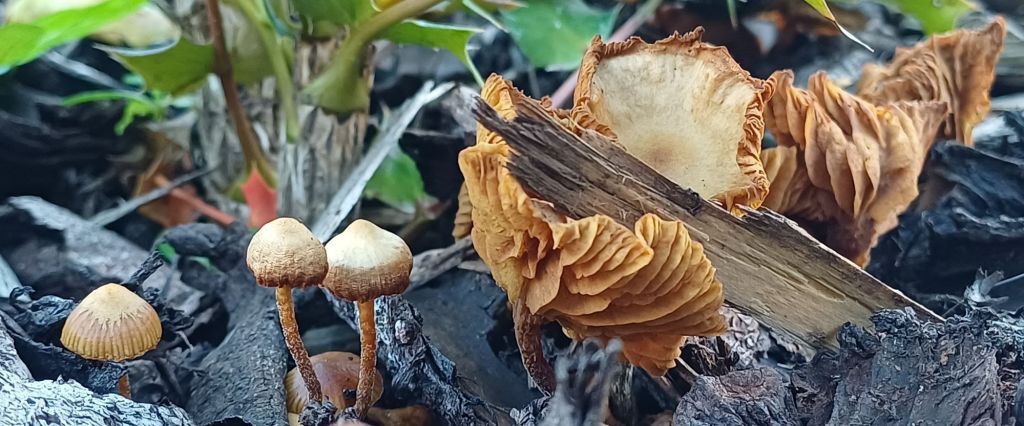
The mushrooms have been a nice surprise this year—we seem to have had loads more than last year. I enjoy spotting the clusters suddenly appearing out of nowhere. Speaking of sudden appearances, my neighbours kindly gave me a Rheum palmatum, which I’ve now planted. I’m hopeful this one will be a success—I managed to kill the last one.

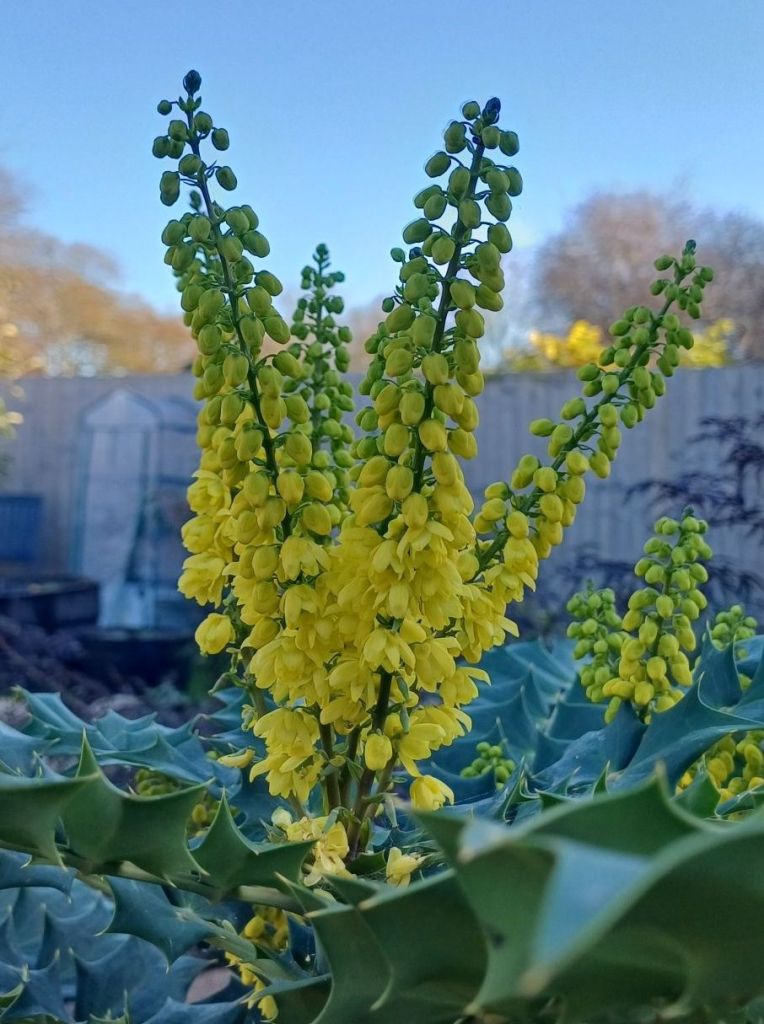
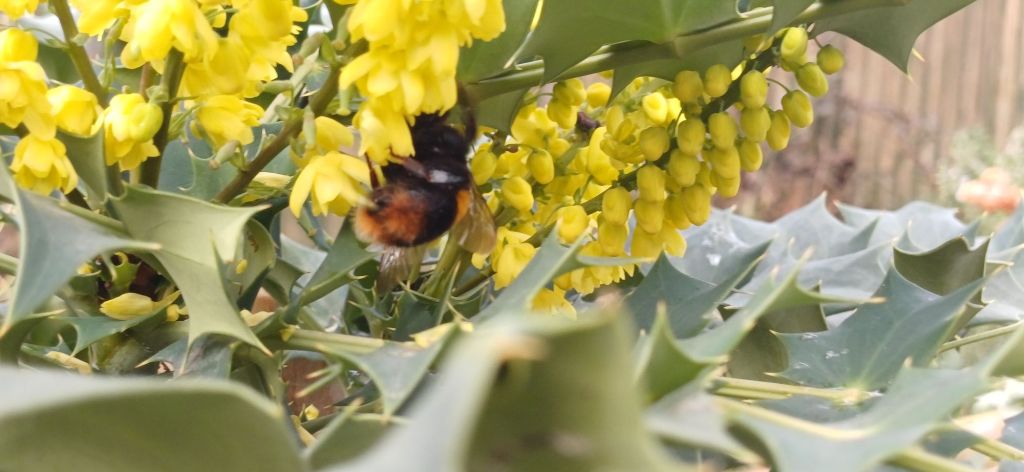
My Mahonia ‘Winter Sun’ has started blooming—there are loads of flowers. Against all expectations, it’s really settled in well in its first year. I read that it might not do much until its second year, so that’s a real bonus. I’ve seen an enormous bumblebee visiting the Mahonia recently. It’s great that the garden still has something to offer bees at this time of year.
I have some Sarcococca cuttings I’ve been growing indoors—they seem to be doing well. Eight out of ten have rooted. One died, and the other is still undecided. I’m pleased with that success rate. The more I can grow for free, the better. I plan to scatter many around the garden, kept small. Little perfume power stations to lift spirits in the winter months.

So that’s where I am now—watching, waiting, and letting things be. The garden’s quiet, but it’s still being a garden as far as I can tell. I’m not trying to fix or force anything. Just showing up, doing the odd job, and trusting that spring will come eventually and all my plants will survive. That’s enough for now.

Discover more from Shrubliminal
Subscribe to get the latest posts sent to your email.
 Shrubliminal